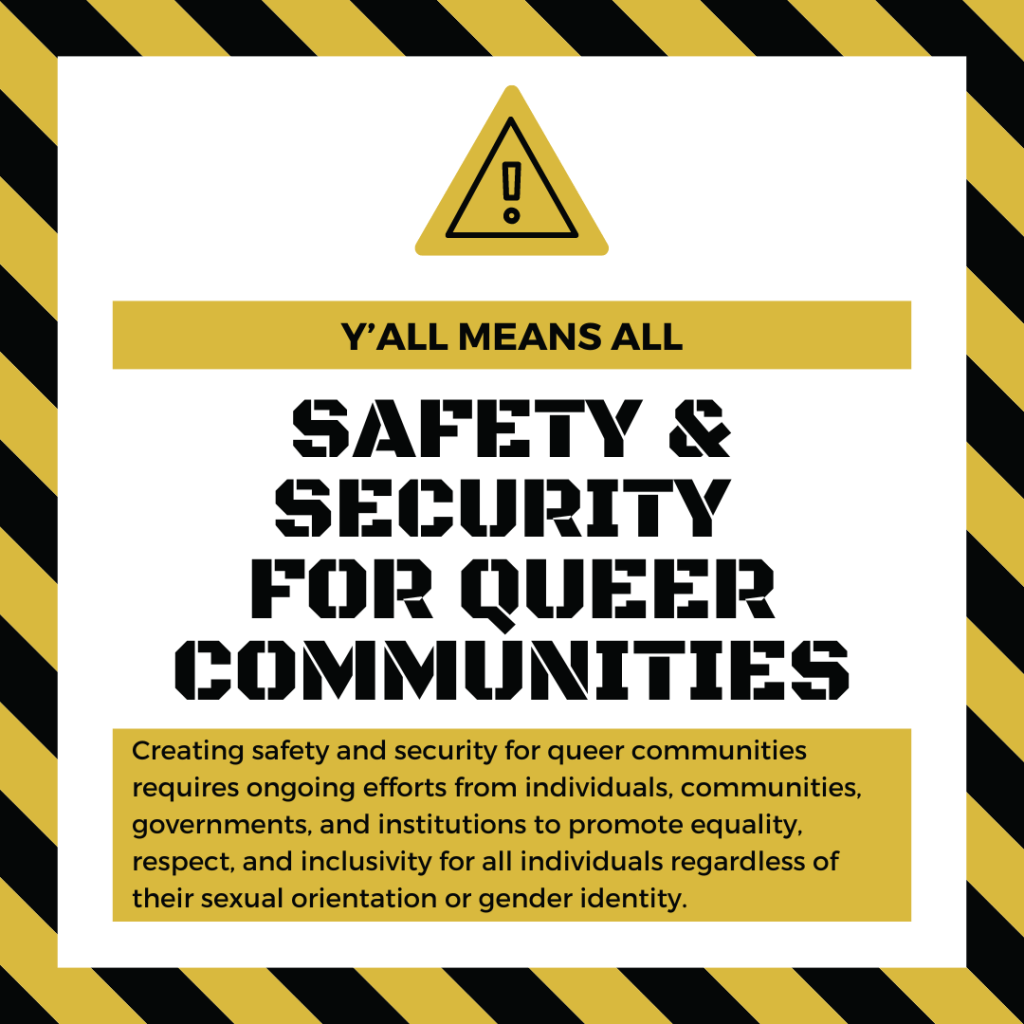
FOR QUEER COMMUNITIES
Safety and security for queer communities involve creating an environment where individuals of diverse sexual orientations and gender identities can live their lives without fear of discrimination, violence, or prejudice. Here are some aspects that contribute to safety and security for queer communities:
1. Legal Protection: A vital component is the existence of comprehensive legal protections that safeguard the rights of queer individuals. This includes anti-discrimination laws, hate crime legislation, and laws recognizing same-sex relationships, such as marriage equality or civil partnership laws.
2. Acceptance and Inclusion: Safety and security require fostering a culture of acceptance and inclusion within society. It involves combating homophobia, transphobia, and biphobia, and promoting understanding, empathy, and respect for queer individuals. This can be achieved through education, awareness campaigns, and promoting diversity and representation in media, workplaces, and public spaces.
3. Accessible Healthcare: Queer individuals should have access to inclusive and culturally competent healthcare services. Healthcare professionals need to be trained to address the specific needs and concerns of queer communities, including issues related to sexual health, mental health, and gender-affirming care.
4. Safe Spaces: Creating safe spaces is crucial for the well-being of queer individuals. These spaces can include LGBTQ+ community centers, support groups, and social organizations where people can gather, find support, and build connections with others who share similar experiences.
5. Protection from Violence: Efforts should be made to prevent and address violence and harassment targeting queer individuals. This involves effective law enforcement responses to hate crimes, initiatives to combat bullying in schools and workplaces, and providing resources for reporting incidents of violence or discrimination.
6. Family and Youth Support: Safety and security should extend to queer youth who may face rejection or homelessness due to their sexual orientation or gender identity. It is essential to provide support services, counseling, and safe housing options for queer youth who may be at risk.
7. Political Advocacy: Engaging in political advocacy helps ensure that laws and policies are enacted to protect the rights of queer communities. This involves supporting queer-friendly candidates, lobbying for inclusive legislation, and participating in activism to bring about positive change.
8. Global Perspective: Safety and security for queer communities are not limited to specific regions or countries. It is crucial to address the challenges faced by queer individuals worldwide, including in countries where being LGBTQ+ is criminalized. Advocacy for global LGBTQ+ rights and supporting organizations working internationally are vital in achieving comprehensive safety and security.
Creating safety and security for queer communities requires ongoing efforts from individuals, communities, governments, and institutions to promote equality, respect, and inclusivity for all individuals regardless of their sexual orientation or gender identity.
 ARTcombobulated
Leave a comment